Dave Thompson June 29, 2026 606 Views
White label web design services let an agency resell websites built by a specialized provider under its own brand, without adding in-house design and development overhead. Financially, agencies usually buy simple five-page WordPress sites for $800 to $2,500 and resell them for $1,600 to $5,000+, often targeting 50 to 70% gross margin.
You probably know the pressure point already. A client asks for a website rebuild, a landing page set, or a new ecommerce store, and your team has two bad options. Say yes and stretch delivery. Say no and hand revenue, control, and long-term account value to another agency.
That’s where white label web design services become more than outsourcing. It’s a business model where your agency owns the client relationship, strategy, pricing, and brand experience, while a specialist partner handles the production work behind the scenes. Done well, it turns web design into a scalable service line that supports SEO, PPC, content, and retention instead of competing with them for internal resources.
Introduction
A client signs for SEO, paid media, or content. Two weeks later they ask the question that exposes your delivery model: can your agency handle the website too?
If the answer depends on whether a freelancer is free, whether your founder can step back into production, or whether your team can squeeze in one more project, growth is already costing margin. The problem is not demand. The problem is fulfillment capacity that does not scale cleanly.
White label web design services give agencies a way to add web design without building a full internal design and development department first. Used well, this is not a stopgap outsourcing play. It is a structured partnership model that lets your agency keep the client relationship, control the strategy, and package web design as part of a broader growth offer.
That shift matters because websites are rarely isolated projects. They affect conversion rates, ad performance, SEO results, retention, and how clients judge your agency’s value over time. When web design is handled through a reliable partner model, it stops being a distracting custom service and becomes a repeatable revenue line that supports your core brand.
A good white label setup also changes the economics of the agency itself. Capacity becomes more predictable. Sales conversations get easier because you can say yes to a wider range of client needs. Delivery pressure drops because your team is no longer trying to do strategy, account management, design, development, QA, and launch coordination with the same people.
Practical rule: if web design keeps showing up in client conversations, it is already part of your service mix. The key decision is whether you will sell it through a system that protects margin, delivery quality, and account control.
What Exactly Are White Label Web Design Services
A client asks for a new site, a landing page set, or a redesign tied to SEO performance. Your agency closes the deal, leads the strategy, and owns the account. The production work is completed by a white label partner behind the scenes under your brand standards and process.
The agency owns the client-facing work
Your agency sells the project, defines the scope, manages communication, and presents the final deliverables. You remain accountable for strategy, positioning, approvals, and client satisfaction.
That matters because clients do not want to manage a chain of specialists just to get a website launched. They want one point of contact, one process, and clear accountability. In a white label model, your agency provides that structure.
The white label partner handles delivery
The partner completes the design and development work based on your brief. That usually includes wireframes, page design, development, staging, QA, revisions, and launch support.
The strongest partnerships feel less like vendor outsourcing and more like an extension of your delivery team. That distinction affects results. A basic vendor waits for tasks. A real partner works within your process, respects your margins, and helps you deliver work that supports your agency’s reputation.
The client should experience one unified brand
From the client’s perspective, the experience should feel consistent from kickoff through launch. No confusing handoffs. No mixed messages. No visible gap between strategy and execution.
That takes operating discipline:
-
Clear briefs: Strategy, site goals, required functionality, and page priorities need to be documented before design starts.
-
Single communication channel: Client feedback should flow through your agency so decisions stay organized and accountable.
-
Brand standards: Visual direction, messaging preferences, and technical requirements should be defined early.
-
Internal QA before client review: Your team should review work against scope and strategy before it reaches the client.
White label works best when the client experiences consistency and your team maintains control.
Agencies run into trouble when they treat white label web design as overflow labor. The model becomes far more profitable when it is built as a formal service line with clear roles, review steps, and production standards. That is the shift from outsourcing to strategic partnership. It lets your agency add web design in a way that strengthens the core brand instead of diluting it.
The Strategic Benefits of Reselling Web Design
The biggest mistake agencies make is treating white label as a staffing shortcut. It’s stronger than that. It changes how you grow.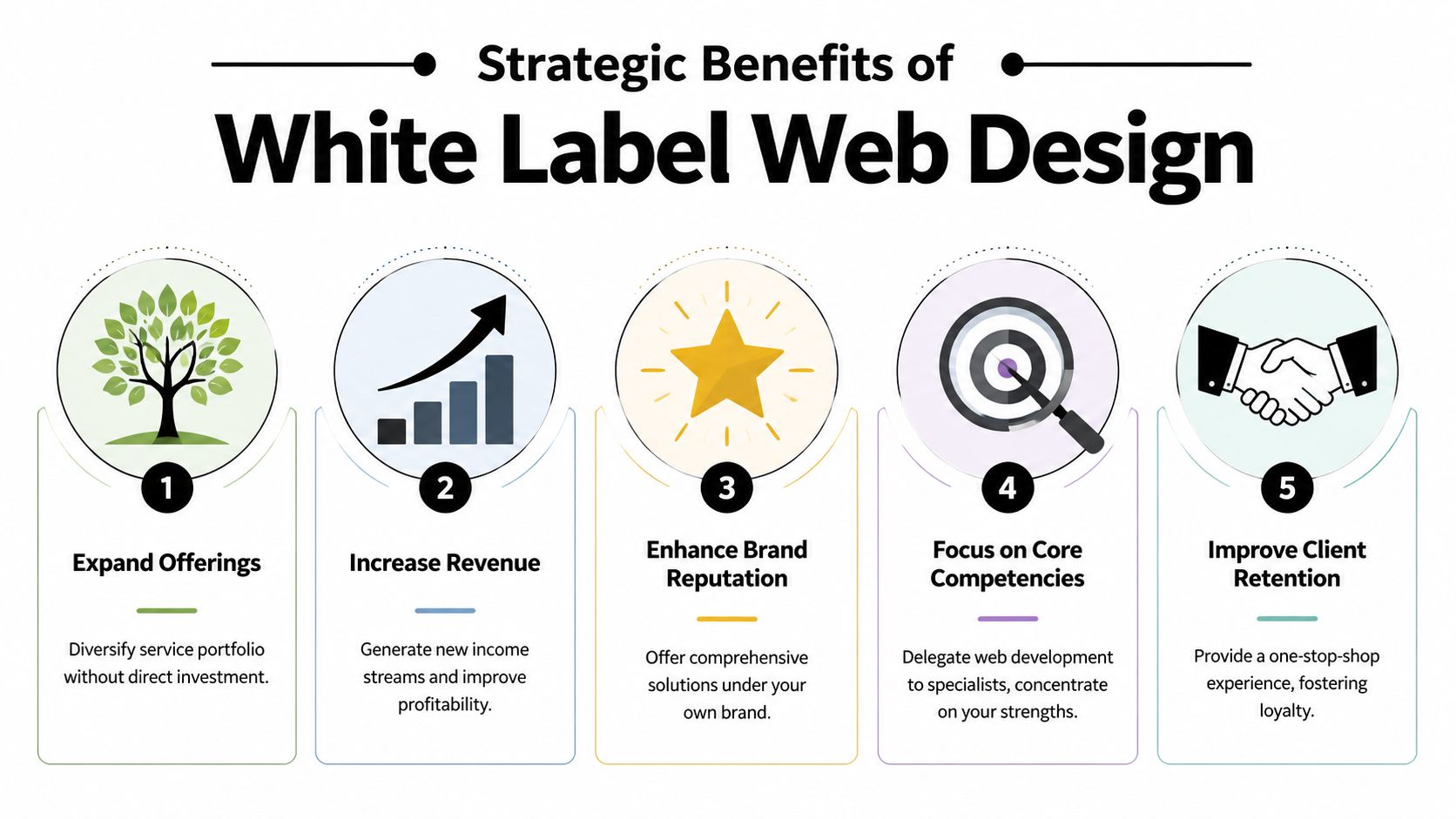
Growth gets less fragile
Agencies that outsource between 40% and 60% of service delivery grow 2.3 times faster, report profit margins that are 18 to 22% higher, and show 42% higher client retention rates, according to Amra and Elma’s white label marketing data.
Those numbers matter because they indicate a strategic advantage, not just labor savings. When delivery capacity is flexible, sales doesn’t have to pause every time the team gets busy.
You can expand without building a department
Web design often sits adjacent to your core offer. SEO agencies need technically sound sites. PPC agencies need landing pages that convert. Social and content agencies need owned web assets they can improve.
Hiring a full in-house team for every adjacent service is expensive and operationally heavy. Reselling lets you add capability faster and package it under your own methodology.
Three practical benefits show up quickly:
-
Broader proposals: You can quote design, redesign, and platform migration work without hesitation.
-
Stronger account control: Clients don’t have to bring in another shop that could upsell around you.
-
Better strategic continuity: Messaging, UX, SEO structure, and campaign goals stay aligned.
Margin control improves when costs are predictable
White label projects turn web delivery into a variable cost. That makes planning easier than carrying fixed payroll for skills you may not fully utilize every month.
It also helps with pricing discipline. When fulfillment costs are known upfront, agencies can decide whether to use a straightforward markup, a bundled package, or a value-based proposal tied to business outcomes.
Agencies don’t just need more services. They need services they can sell repeatedly without rebuilding operations each quarter.
Retention gets stronger when you solve more of the client’s problem
Clients leave less often when their agency can solve connected problems in one engagement. A redesign can support local SEO. A faster site can support paid traffic efficiency. A better content structure can support service page expansion.
That’s why web design shouldn’t sit in a silo. Resold strategically, it becomes a retention tool and a revenue tool at the same time.
Calculating Your Pricing and Profit Margins
Pricing is where many agencies either undercharge out of caution or overcomplicate the model. The cleaner approach is to start with market ranges, then decide how you want to package the work.
The benchmark ranges to know
According to Agency Designs’ website design industry statistics, white label pricing typically falls into these ranges:
-
Simple five-page WordPress sites: $800 to $2,500 wholesale
-
Custom ecommerce builds: $5,000 to $20,000 or more wholesale
-
Basic site resale pricing: $1,600 to $5,000+
-
Complex build resale pricing: $10,000 to $40,000+
-
Target gross margin: 50 to 70%
That gives you a useful frame. Your agency doesn’t need to guess whether a service line can work financially. It can.
Sample White Label Web Design Pricing Model
| Project Type | Wholesale Cost (To Agency) | Retail Price (To Client) | Gross Profit | Gross Margin |
|---|---|---|---|---|
| Basic five-page WordPress site | $800 | $1,600 | $800 | 50% |
| Basic five-page WordPress site | $2,500 | $5,000 | $2,500 | 50% |
| Custom ecommerce build | $5,000 | $10,000 | $5,000 | 50% |
| Custom ecommerce build | $20,000 | $40,000 | $20,000 | 50% |
How to price beyond simple markup
A pure cost-plus model is easy to manage, especially for early projects. But it isn’t always the best client-facing pricing strategy.
To put it another way:
-
Use cost-plus for standardized builds: Brochure sites, templated service sites, and straightforward redesigns.
-
Use value-based framing for strategic projects: Ecommerce, local lead generation sites, and redesigns tied to SEO or conversion goals.
-
Bundle where it improves retention: Design plus SEO setup, analytics, content upload, and maintenance often creates a stronger offer than design alone.
The trade-off is simple. Low markups win some deals but can trap you in project work with too much management time and too little upside. Aggressive pricing without strong process can create delivery stress. Healthy agencies usually aim for margin first, then adjust packaging to fit the market.
How to Choose the Right White Label Partner
A weak partner doesn’t just create rework. They create brand risk. If your agency sells bundled services, a poor build can damage SEO performance, delay campaigns, and make your team look disorganized.
Start with infrastructure, not promises
Providers need to support multiple platforms such as WordPress, Shopify, and Webflow, and they need isolated staging environments accessible only to the partner agency. That setup can reduce revision cycles by 30 to 40% because your team can review quality before anything is shown to the client, based on E2M’s white label website design and development guidance.
That one operational detail matters more than most sales decks. If you can’t review work privately, you lose one of the main protections white label is supposed to give you.
Look for the signs of a mature delivery partner
The right partner should make your process tighter, not looser.
Use this filter:
-
Platform fit: They should already handle the CMS and ecommerce systems your clients buy.
-
Private staging workflow: Your team needs room for internal review and consolidated feedback.
-
Revision discipline: You want a defined process, not open-ended back and forth.
-
Launch support: Migration, redirects, SSL setup, and deployment tasks should be covered operationally.
-
Invisible fulfillment: The provider should be structurally set up to stay behind your brand.
Protect your brand before the first build
Research on the white label market highlights a real gap around quality assurance, dispute handling, and bundled-service risk. That’s why agencies should insist on clear scopes, revision limits, review checkpoints, and service expectations before the first client ever enters the workflow.
If a partner can’t explain how they handle revisions, post-launch issues, and staging approvals, they’re not ready to carry your brand.
This is also where platform support matters. Agencies that want one operational layer across SEO, reporting, and web fulfillment often prefer a systemized environment over a loose collection of freelancers and tools. Agency Platform is one example of that approach. It offers a fully brandable client dashboard and white label fulfillment across web design and marketing services, which helps agencies keep communication and visibility inside one branded workflow.
Integrating Web Design with Your Core SEO Services
For SEO agencies, web design isn’t a side service. It’s often the asset that determines whether SEO work starts with momentum or cleanup.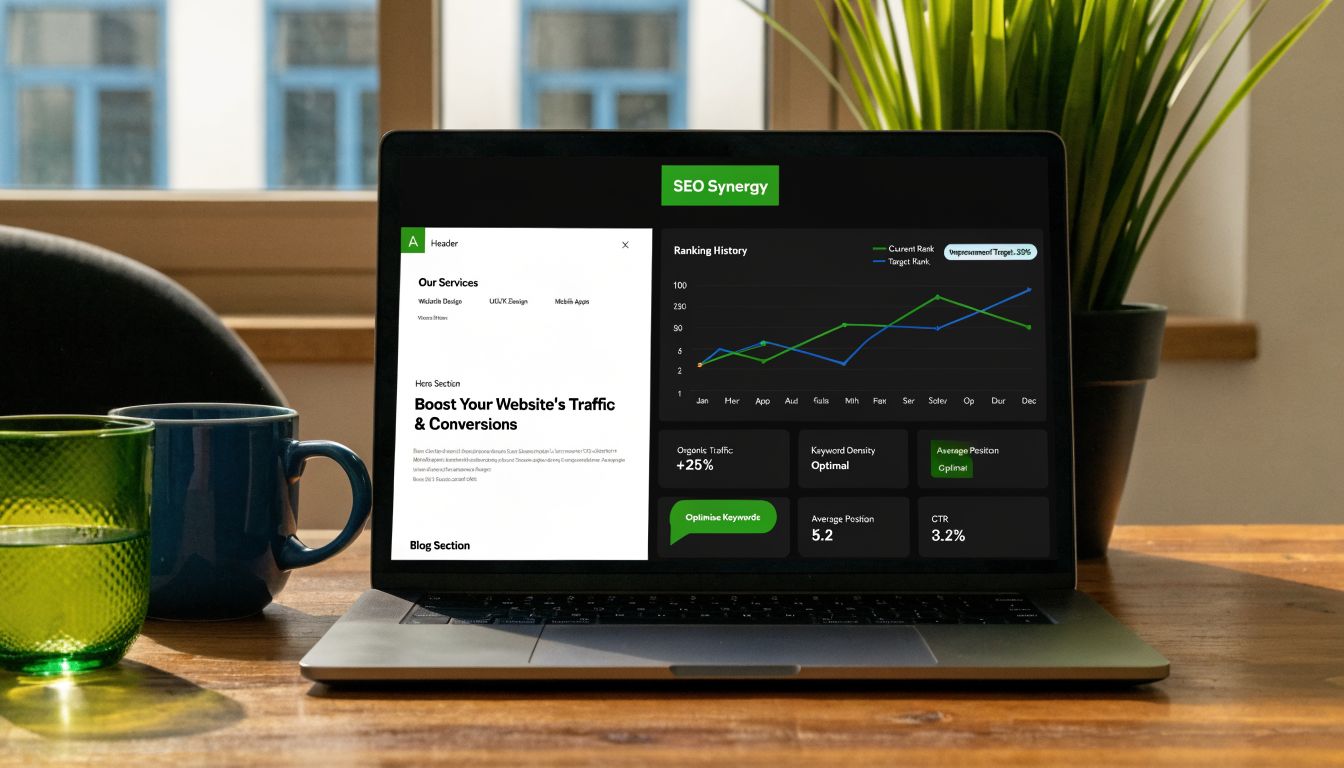
SEO-first builds outperform retrofit thinking
White label web design services should build SEO into the architecture from the start. That includes semantic HTML5, schema.org markup, Core Web Vitals targets, proper heading hierarchy, internal linking structure, XML sitemaps, canonicalization, and mobile-ready UX patterns.
According to ALM Corp’s guide to white label web design services, sites built with SEO-first architecture achieve 40 to 60% faster organic visibility gains than sites where SEO is retrofitted after launch. The technical benchmarks cited include Largest Contentful Paint under 2.5 seconds, First Input Delay under 100ms, and Cumulative Layout Shift under 0.1.
Why this matters for agency operations
When the site is built correctly, your SEO team spends less time correcting basic technical issues and more time on strategy, content, internal linking, and local intent mapping. That creates a cleaner service experience for the client.
A few implementation points matter immediately:
-
Schema and semantic structure: These support crawl clarity and content interpretation.
-
Core Web Vitals readiness: Performance affects both usability and search visibility.
-
Mobile UX details: Responsive images, navigation, and touch-target sizing shape how real users interact with the site.
-
Measurement flexibility: Tag management is easier to maintain than hard-coded tracking.
The connection between UX and rankings is often underestimated. If you want a useful refresher on that overlap, Agency Platform’s article on understanding user experience and its impact on SEO is worth reviewing before you finalize your web design process.
Your Onboarding Checklist for the First Client
The first project should be controlled, not ambitious. Don’t test a new partner on your messiest account. Start with a client where scope is clear, decision-makers are responsive, and success is easy to evaluate.
The workflow that keeps control with your agency
-
Run discovery yourself
Gather goals, target audience, required pages, examples, brand assets, platform preferences, content status, and timeline expectations. The quality of this step drives everything after it. -
Convert notes into a real project brief
Don’t send a partner a pile of call notes. Turn the information into a structured brief with scope, functionality, design direction, content ownership, and approval process. -
Review in staging before client presentation
Keep internal QA separate from client feedback. Consolidate comments so the partner gets one clear revision set, not five partial opinions. -
Present as your agency’s work
Walk the client through the design rationale, UX choices, and any SEO or conversion considerations. You’re not just forwarding deliverables. You’re framing value. -
Own launch and handoff communication
Confirm approval, publish the site, and document what happens next. That may include analytics, SEO, maintenance, or future landing page work.
The agency should always control discovery, strategy, and presentation. The partner should handle execution without becoming visible.
For agencies that want a more productized starting point, Agency Platform’s white label web design service page shows the kind of packaged workflow that’s easier to operationalize than custom scoping every time.
Conclusion The Path to Scalable Agency Growth
White label web design services work best when you stop thinking about them as outsourced labor and start treating them as delivery infrastructure. The upside is clear. Better margins, broader service capacity, stronger retention, and less operational strain.
The agencies that make this model work don’t chase the cheapest fulfillment. They build a repeatable system around briefs, review control, brand standards, and integrated service delivery. If you’re also rethinking how your agency handles adjacent growth functions, this guide to sales outsourcing is a useful companion read because the same principle applies: scale gets easier when specialized execution sits behind a strong client-facing brand.
If you want to add web design without building an in-house production team, Agency Platform gives agencies a brandable environment for fulfillment, reporting, and client visibility so web design can fit cleanly into a scalable service model.