Dave Thompson June 15, 2026 710 Views
Yes, SEO is worth it, delivering an average ROI of over 22:1. In 2026, that value comes less from raw traffic alone and more from qualified lead generation, durable brand authority, and visibility across both traditional search and AI-shaped discovery.
A lot of agency partners still ask the wrong version of the question. They ask whether SEO is worth paying for, as if it were a line item like ad spend. The better question is whether building organic visibility creates a business asset that keeps producing after the monthly invoice is gone. In practice, that’s why strong SEO keeps outperforming short-term channels for firms that sell into search-driven markets.
Is SEO Worth It? The Definitive Answer for 2026
The short answer is yes. SEO remains one of the few channels that can produce both immediate commercial impact and compounding long-term value. According to Exploding Topics’ SEO statistics roundup, businesses earn an average of over $22 for every dollar spent on SEO, and full-service SEO can generate up to 748% ROI over time.
That matters even more now because AI search has changed what clients expect. A good campaign no longer wins only by increasing sessions. It wins by putting the brand in front of high-intent searches, earning trust before a sales call, and strengthening the site’s authority so it can survive platform shifts.
Why the answer isn’t as simple as it used to be
SEO is harder than it was a few years ago. Search results are crowded. AI summaries reduce some clicks. Weak content gets filtered out faster. Cheap vendors still sell activity instead of outcomes.
But the core economics still favor SEO when buyers actively search for a solution. Paid campaigns stop when the budget stops. Organic visibility can keep producing leads, branded demand, and lower acquisition costs long after the work is done.
SEO is worth it when you treat it like asset building, not traffic renting.
For partner agencies, that’s the central conversation to have with clients. SEO isn’t a miracle. It’s a disciplined operating system for discoverability, credibility, and pipeline growth.
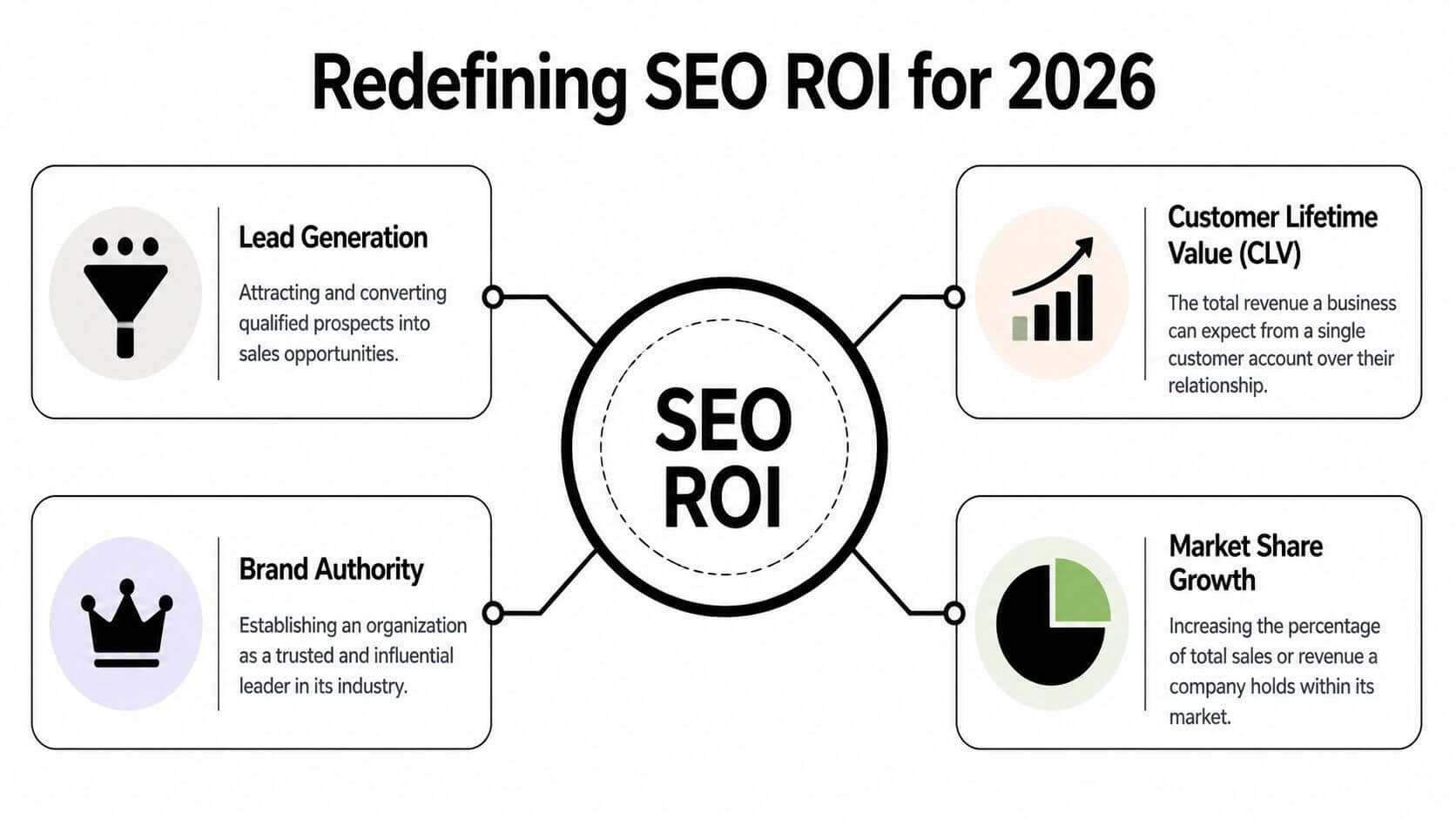
Redefining SEO ROI Beyond Simple Traffic
If you’re still proving SEO value with visits alone, you’re underselling it. Traffic matters, but traffic without intent is just server load.
Page Optimizer Pro’s SEO ROI analysis notes that 53% of all website traffic comes from organic search. More important, the #1 organic result gets a 27.6% click-through rate, and SEO leads close at 14.6% compared with 1.7% for outbound leads.
What agencies should measure instead
A mature SEO program should answer four commercial questions:
-
Lead quality: Are inquiries coming from people who already understand the service and need less sales education?
-
Sales efficiency: Are organic leads moving faster because search built trust earlier?
-
Brand authority: Does the company appear repeatedly across service pages, local results, and informational searches?
-
Search market share: Is the brand taking visibility from direct competitors where buying intent is strongest?
That last point matters in AI-influenced search. A client may see fewer clicks on some informational terms while still winning more branded searches, more bottom-funnel leads, and stronger conversion from people who did click.
Why visibility now has two layers
Traditional rankings still matter. So do citations, summaries, and brand mentions in AI-driven results. Agencies need to explain that both layers come from the same foundation: technically accessible pages, clear entity signals, strong service content, and evidence of real expertise.
Clients don’t buy traffic reports. They buy revenue, lower sales friction, and proof that their brand is becoming easier to find and easier to trust.
That’s the shift. SEO ROI in 2026 is a business performance story, not a vanity metric story.
The Real Costs and Timelines of Effective SEO
Most SEO disappoints because the expectations were wrong before the work even started. Clients were sold speed when they should’ve been sold sequence.

The closest analogy is this. PPC is renting shelf space. SEO is improving the property you own. One gives immediate placement. The other raises the long-term value of the asset.
What you’re actually paying for
A legitimate SEO campaign usually includes technical fixes, content production, on-page optimization, internal linking, reporting, and authority building. For agencies, white-label fulfillment often adds project management, QA, and client-ready reporting on top.
That work takes time because search performance depends on multiple systems working together. The site has to be crawlable. The content has to match intent. The pages have to earn trust. Then search engines have to reprocess those improvements.
Timeline expectations that won’t hurt retention
When clients ask how long SEO takes, the right answer is that it depends on competition, site health, and the quality of execution. What’s predictable is the pattern. Technical cleanup and content alignment come first. Ranking movement follows. Lead impact usually lags behind visibility improvements.
A more realistic way to frame timelines is:
-
Early phase: technical fixes, page mapping, content priorities, reporting setup
-
Middle phase: ranking gains on lower-friction terms, improved local visibility, stronger engagement signals
-
Compounding phase: broader keyword coverage, more stable lead flow, stronger branded search presence
For a more detailed breakdown of realistic SEO pacing, this guide on how much time SEO will take is a useful client-facing reference.
What doesn’t work
Cheap retainers usually buy fragmented work. One month is backlinks. Next month is a blog post no one would ever rank. Then reporting gets padded with impressions and branded terms.
That approach fails because SEO performance comes from coordination. If the technical layer is weak, content stalls. If content is thin, links don’t help much. If reporting isn’t tied to leads, the client loses confidence before the campaign has time to mature.
A serious SEO investment isn’t about paying more for the same deliverables. It’s about funding the right sequence of work so momentum can build.
Essential SEO Components That Drive Measurable Returns
The campaigns that produce measurable returns usually get three things right. They fix technical friction, publish content that deserves to rank, and build authority with restraint instead of gimmicks.
Technical SEO has direct revenue impact
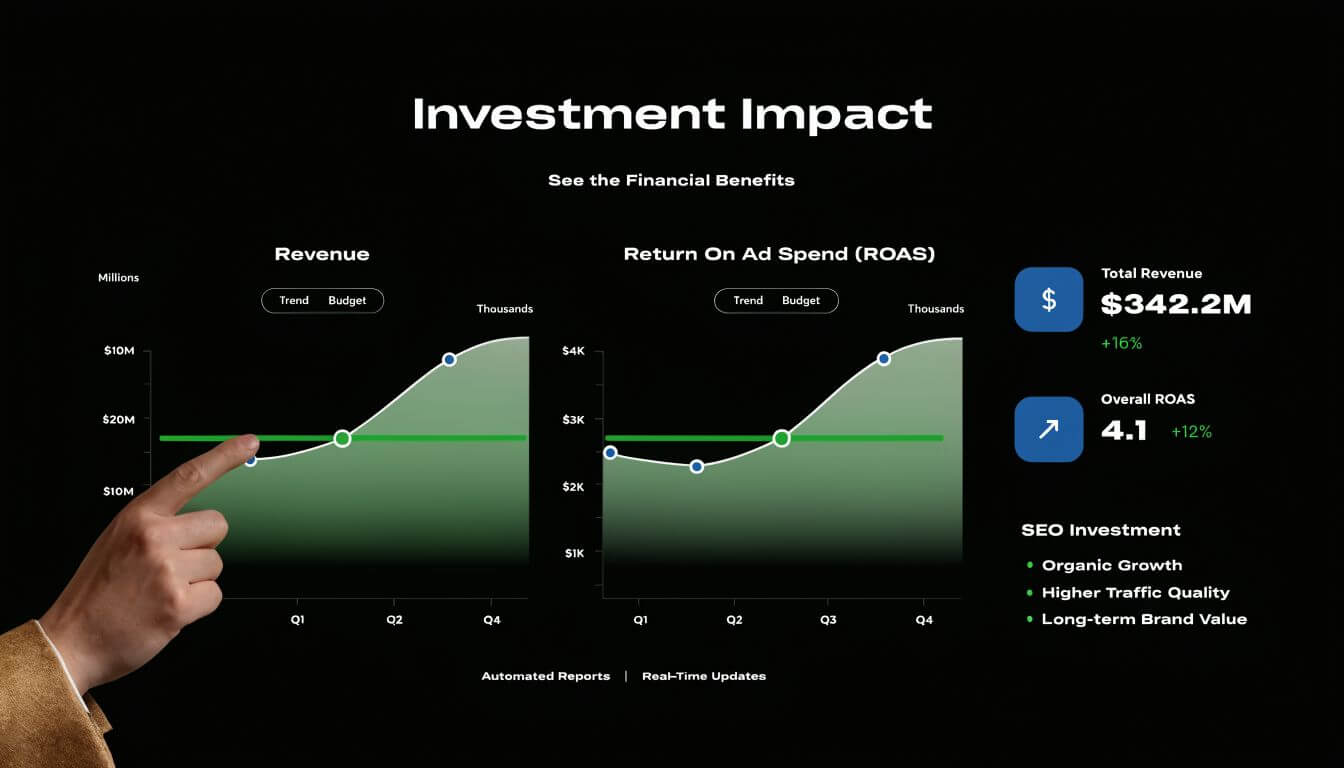
Technical SEO isn’t a back-office nicety. It’s part of conversion optimization and search visibility at the same time. As explained in CSIPL’s review of why technical SEO still matters, a 0.1-second improvement in page speed can boost conversion rates by over 8%, and sites that fix Core Web Vitals often see a 15% to 25% uplift in organic traffic within months.
Core Web Vitals include Largest Contentful Paint, First Input Delay, and Cumulative Layout Shift. If those are poor, users bounce, engagement drops, and rankings usually suffer with it.
What to audit first
-
Page speed and rendering: Heavy assets, bloated scripts, and poor mobile performance
-
Crawl access: Broken internal links, indexation issues, duplicate URLs, weak sitemap hygiene
-
Structured data: Schema that helps search engines interpret services, locations, and entities clearly
Content has to prove expertise, not just target keywords
AI-influenced search has raised the bar on content quality. Thin pages written to “cover the keyword” don’t hold up well anymore. Strong content answers the specific commercial question, supports the answer with clear service detail, and fits into a broader topical structure.
In agency practice, the strongest pages usually do three things well:
| Component | What it looks like |
|---|---|
| Intent match | The page answers the exact question behind the query |
| Service depth | It explains process, scope, fit, and outcomes clearly |
| Topical support | Related pages reinforce expertise across the subject |
Practical rule: If a page could rank but still fail to convince a buyer, it isn’t finished.
Links still matter, but bad links still hurt
Link building remains useful when it acts like reputation building. Relevant placements, editorial mentions, and citations from trusted sites support authority. Manufactured patterns, irrelevant placements, and volume-first link schemes still create risk.
For agencies reselling SEO, fulfillment quality becomes obvious. Good partners build authority in ways that support the content and brand. Weak providers chase reports that look active but leave the site more fragile.
A Decision Framework for Your Business or Clients
Not every business should invest in SEO the same way. The first screen is simple. Do your buyers use search engines when they need what you sell?
If they do, SEO often becomes more efficient over time than paid acquisition. According to SEO.com’s analysis of whether SEO is worth it, businesses in search-driven markets can reduce customer acquisition costs by 40% to 60% versus paid channels after the first year.
Three questions that clarify the decision
The best agency conversations usually start with these questions:
Is there clear search demand for the service
If prospects actively search for the service category, pain point, or local provider, SEO has a path to value. If demand is weak or the market depends mostly on outbound sales, SEO can still help, but it may not be the primary growth lever.
Is the customer value high enough to justify the ramp
SEO usually pays back best when one new customer is meaningful to the business. That gives the campaign enough commercial room to absorb the early months when groundwork matters more than immediate lead volume.
Can the business support sustained execution
A campaign needs a functional website, usable landing pages, a credible offer, and someone who can close inbound demand. SEO can’t rescue weak sales operations or confusing positioning.
A practical way to qualify the fit
Use a simple yes-or-no screen before you pitch hard:
-
Search behavior exists: Prospects already look for this solution online
-
The website can convert: The pages explain the offer clearly and make contact easy
-
The business can stay consistent: There is patience for ongoing optimization, not one-off bursts
-
The market rewards trust: Buyers compare providers and care about credibility signals
When those conditions are present, SEO is usually a strong strategic investment. When they aren’t, the right move may be to tighten the offer first, improve conversion paths, or use SEO as a secondary support channel.
The Hidden Risks of Cheap SEO and How to Avoid Them
The easiest way to make SEO look like a bad investment is to buy bad SEO. Agencies see this more than anyone because the damage lands twice. First on performance, then on client trust.

Sure Oak’s discussion of whether SEO is worth it for small business highlights the problem sharply. It cites a 95% failure rate implied by poor strategies, and notes that businesses spending $500 per month on proper SEO are 53.3% more satisfied than those using low-cost scams.
What cheap SEO usually looks like
Low-quality providers rarely describe strategy clearly. They talk about rankings in the abstract. They promise speed. They fill reports with tasks instead of business outcomes.
Common warning signs include:
-
Link-heavy pitches: The vendor leads with volume, not relevance or quality
-
Generic content production: The same template gets reused across industries and locations
-
No technical accountability: Nobody owns crawl issues, site performance, or indexation problems
-
Opaque reporting: The client can’t tell what changed, why it changed, or whether leads improved
Why resellers carry extra risk
If you’re a partner agency, the vendor’s mistakes become your mistakes. The client doesn’t separate your brand from the fulfillment team behind it. That’s why cheap SEO isn’t just a margin problem. It’s a retention problem and a reputation problem.
Bad fulfillment doesn’t only fail quietly. It forces your account team to defend work they didn’t control.
How to vet an SEO partner properly
Don’t ask only what they do. Ask how they decide what to do first, how they report progress, how they handle weak content, and how they respond when rankings don’t move on schedule.
A dependable partner should be able to explain:
-
Prioritization: Which fixes come first and why
-
Content standards: How pages are written for expertise and intent
-
Authority methods: Where links or mentions come from
-
Reporting logic: How they tie campaign activity to leads, not vanity metrics
If those answers are vague, the campaign will probably be vague too.
How Agencies Can Scale SEO and Prove Client Value
Scaling SEO profitably isn’t just about outsourcing execution. It’s about standardizing proof. Clients stay when they can see what changed, why it matters, and how it connects to revenue.
That has become harder in AI-shaped search because some top-of-funnel clicks are disappearing. HigherVisibility’s look at whether SEO is worth it notes that traditional SEO traffic has dropped 15% to 20% in some niches due to zero-click results, while agencies using integrated tools for E-E-A-T and Generative Engine Optimization are seeing 2x lead growth and 25% more visibility in AI summaries.
What agencies should report now
A modern SEO reporting model should include more than rank tracking. At minimum, agencies should show movement across visibility, conversion, and trust signals.
That usually means tracking:
-
Qualified lead trends: Form fills, calls, booked consults, and lead quality notes
-
Commercial page performance: Service and location pages, not just blog traffic
-
Search footprint: Organic rankings, local visibility, branded demand, and AI-surface presence
-
Execution visibility: What was shipped, what was tested, and what is pending
For agencies building recurring revenue, a white-label model works best when the dashboard, reporting cadence, and fulfillment process all feel like one system. This is why many firms use a framework similar to the one described in white-label SEO as a game changer for growing agencies.
The operational model that scales
The agencies that hold margins usually separate three functions clearly. Strategy decides priorities. Fulfillment executes specialized work. Reporting translates that work into business language the client understands.
That structure keeps account managers from improvising SEO explanations every month. It also prevents the common reseller failure where fulfillment is technically busy but commercially directionless.
The scalable version of SEO isn’t more tasks. It’s better evidence.
The Final Verdict on SEO’s Enduring Value
So, is search engine optimization worth it? Yes, when the business sells into active search demand and the campaign is run like a long-term investment instead of a cheap monthly tactic.
The strongest case for SEO in 2026 isn’t based on traffic alone. It’s based on lead quality, lower acquisition costs over time, stronger authority signals, and the ability to stay visible as search behavior keeps shifting toward AI-assisted discovery. That’s why SEO still belongs in the core growth mix for agencies and their clients.
What doesn’t work is underfunded execution, thin content, risky links, and reporting that hides the business picture. What does work is technical discipline, credible content, controlled authority building, and a reporting system that makes value obvious.
If you’re ready to offer SEO as a scalable, client-retaining service, Agency Platform gives agencies a white-label way to deliver fulfillment, reporting, and branded visibility without building the entire operation in-house.