Dave Thompson September 15, 2026 18 Views
A vendor management system (VMS) is a centralized platform that helps businesses manage their entire vendor lifecycle, from onboarding and contract management to performance tracking and payment. For marketing agencies, a VMS consolidates interactions with freelancers, contractors, and software providers, replacing scattered spreadsheets and email chains with a single source of truth. This streamlined oversight is crucial in today's digital landscape, where nearly 46% of all Google searches have local intent, requiring agencies to manage a diverse network of specialized local SEO partners and tools.
What is a Vendor Management System and Why Do Agencies Need One?
A Vendor Management System (VMS) is software that provides a unified framework for managing external suppliers, freelancers, and service providers. It centralizes every aspect of vendor relationships, including contracts, performance metrics, compliance, invoicing, and communication. Think of it as an operational control tower for your agency's fulfillment network.
In 2026, with the rise of AI-driven search and an estimated 40% of searches ending without a click, agencies must deliver exceptional value to retain clients. A VMS helps by ensuring the underlying fulfillment from vendors is efficient, transparent, and directly tied to client outcomes. It resolves common pain points like inconsistent deliverables, missed deadlines, and a lack of clear ROI data, which are major drivers of client churn. For agencies offering specialized services like local SEO, a robust system for managing vendor quality is no longer optional—it's essential for survival.
Key Benefits of a VMS for Marketing Agencies
- Centralized Control: A VMS creates a single source of truth for all vendor data. Contracts, service-level agreements (SLAs), and performance history are stored in one accessible location, eliminating confusion and ensuring teams work from the same information.
- Enhanced Efficiency: Automated onboarding workflows can reduce the time it takes to vet and activate a new vendor from over three weeks to just a few days. This speed means campaigns launch faster and revenue is recognized sooner.
- Clear Performance Visibility: A VMS connects vendor activities directly to client KPIs. Instead of tracking vague activities, you can measure concrete outcomes like backlinks acquired, content published, or leads generated, making it simple to demonstrate value and justify costs. According to industry reports, agencies using a VMS can improve vendor performance tracking by over 35%.
- Reduced Risk and Improved Compliance: With nearly 30% of data breaches involving a third party, managing vendor compliance is critical. A VMS automates the tracking of certifications, data access policies, and contract renewals, flagging potential risks before they become liabilities.

How AI is Transforming Vendor Management in 2026
Artificial intelligence has evolved vendor management systems from passive databases into proactive, intelligent platforms. AI-powered features automate routine tasks, predict performance issues, and provide strategic insights that were previously unavailable. This shift is particularly impactful for agencies managing complex, multi-vendor campaigns.
AI-driven automation significantly accelerates the vendor lifecycle. For instance, intelligent document processing can validate tax forms and contracts in real-time, cutting the average vendor onboarding time from 23 days down to just 5-7 days. For agencies, this acceleration translates directly to faster campaign launches and improved client satisfaction.
Predictive Performance Analytics
Instead of just reporting on past performance, modern vendor management systems use AI to predict future outcomes. These systems analyze historical data, delivery times, and quality metrics to generate predictive scorecards for each vendor. This allows agency managers to identify high-performing partners and proactively address issues with underperforming ones before they impact client results. Predictive analytics has been shown to improve delivery accuracy by up to 25%.
Intelligent Risk and Compliance Monitoring
AI automates continuous compliance monitoring by flagging expiring certifications, contractual deviations, and potential security vulnerabilities in real-time. This automated oversight helps agencies mitigate risks associated with their third-party network, a critical function given the increasing regulatory scrutiny on data privacy and security. This reduces the manual hours spent on audits by an estimated 40-60%.
Platforms like Agency Platform integrate these AI capabilities into a white-label solution, allowing agencies to offer sophisticated, branded vendor oversight without the cost and complexity of developing proprietary software.

Core Capabilities Your VMS Must Have
When evaluating a vendor management system, focus on features that directly address agency-specific challenges. The right platform should not only streamline your internal operations but also enhance the value you deliver to clients.
1. Centralized Vendor Profiles and Contract Management
The system must provide a comprehensive, searchable database for every vendor. Each profile should consolidate contracts, NDAs, renewal dates, and communication history. This eliminates administrative bottlenecks and ensures your team has instant access to critical information, preventing missed deadlines and unexpected contract lapses.
2. Automated Onboarding Workflows
Look for customizable templates that automate the entire onboarding process, from document collection to internal approvals. Automating these steps reduces manual errors, ensures consistency, and allows new vendors to become productive in days, not weeks.
3. Performance Scorecards and KPI Tracking
A crucial feature for agencies is the ability to create performance scorecards that link vendor deliverables to client KPIs. Whether it's tracking the domain authority of backlinks or the traffic generated from a piece of content, these scorecards provide tangible proof of value during client reviews.
4. White-Label Client-Facing Dashboards
Your VMS should empower you to present performance data to clients through a dashboard that features your agency's branding and is hosted on your own domain. This reinforces your brand's authority and provides a seamless, professional experience for your clients.
5. Integrated Billing and Spend Analytics
The platform should offer a consolidated view of all vendor-related expenses, allowing you to track invoices, monitor budgets, and analyze cost-per-deliverable. This financial visibility is essential for managing profitability and making data-driven decisions about your vendor relationships.
Solutions like the White Label Services from Agency Platform are specifically designed for agencies, bundling these core capabilities into a turnkey solution that supports scalable growth.

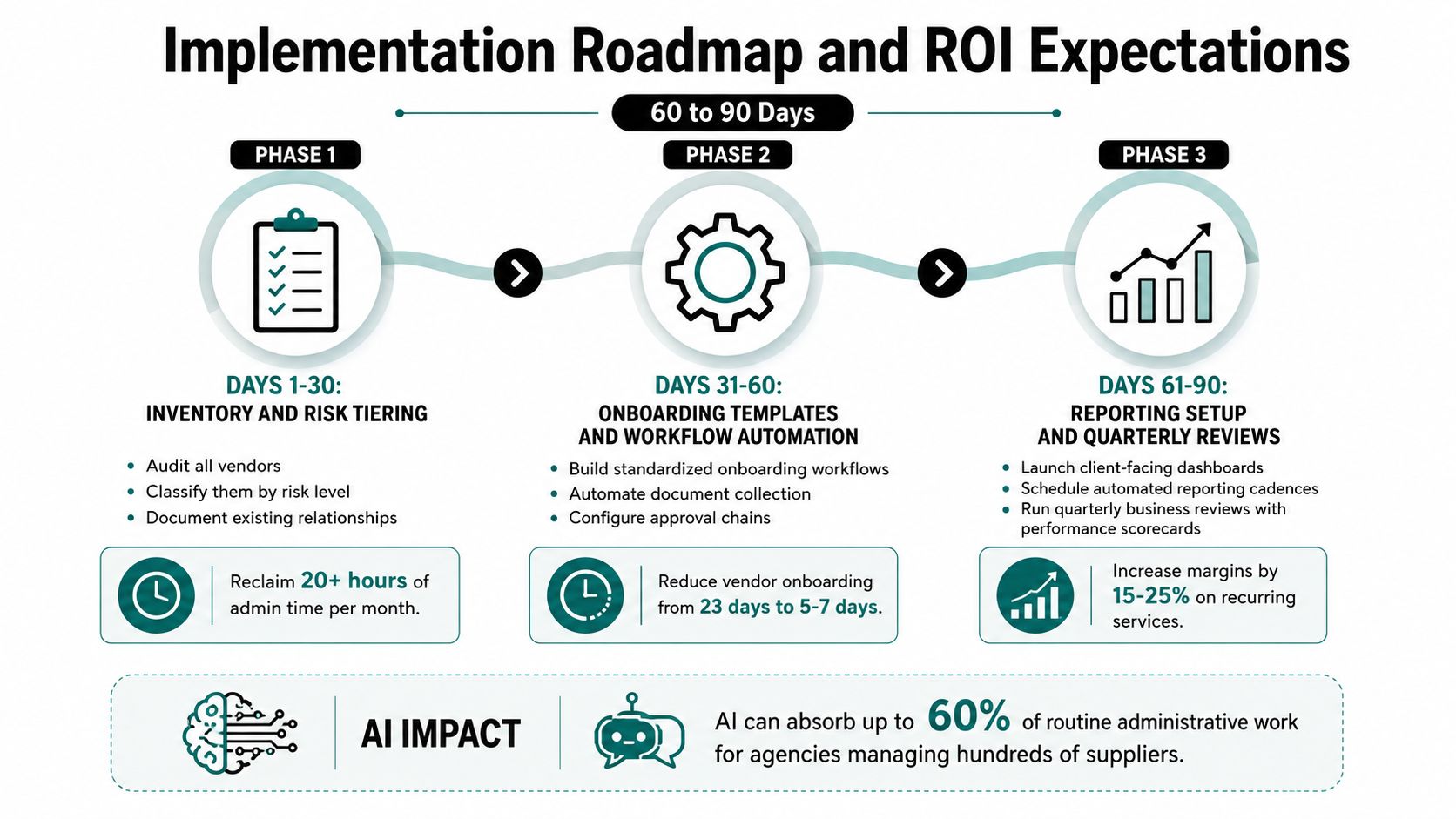
Implementing a Vendor Management System: A 90-Day Roadmap
Successfully implementing a VMS involves a phased approach that minimizes disruption and delivers quick wins. A well-structured 90-day plan can transform your vendor operations from chaotic to streamlined.
Phase 1: Inventory and Strategy (Days 1-30)
The first month is dedicated to auditing your existing vendor network. Create a comprehensive inventory of all suppliers, log their contracts and SLAs, and classify them into tiers based on their strategic importance. This initial cleanup alone can reclaim over 20 hours of administrative work per month for a mid-sized agency.
Phase 2: Automation and Workflow Standardization (Days 31-60)
In the second month, focus on building automated workflows. Develop standardized templates for onboarding, performance reviews, and compliance checks. This is where you'll see a dramatic reduction in onboarding time, empowering your team to launch campaigns faster.
Phase 3: Reporting and Optimization (Days 61-90)
The final phase involves setting up client-facing dashboards and automated reporting schedules. Connect vendor performance data to client KPIs to create compelling quarterly business reviews (QBRs). This level of transparency not only builds trust but has also been shown to improve client retention by up to 22%.
Following this roadmap, agencies can expect to see a measurable ROI within the first year, with margin improvements on recurring services often reaching 15-25%. White-label platforms can significantly accelerate this timeline. For instance, Agency Platform Pre-Sales Tools help agencies demonstrate this value proposition from the very first interaction with a prospect.
The Future is Integrated: Your Next Steps
In an era dominated by AI search and zero-click results, proving value is paramount. A modern vendor management system is no longer a luxury but a foundational component of a successful, scalable agency. By centralizing control, automating workflows, and providing clear insight into performance, a VMS empowers your agency to operate more efficiently, mitigate risks, and deliver superior results for clients.
The key is to adopt a platform that not only streamlines your back-end operations but also enhances your client-facing brand. White-label solutions provide the perfect bridge, offering enterprise-grade functionality under your own banner. This allows you to focus on strategy and growth, confident that your vendor network is managed with precision and professionalism.
For agencies looking to adapt to the future of digital marketing and gain a competitive edge, exploring a comprehensive vendor management solution is the logical next step.
Ready to unify your vendor operations and scale your agency with confidence? Discover how Agency Platform provides a complete white-label solution to manage vendors, streamline fulfillment, and delight clients. Visit us at https://www.agencyplatform.com to learn more.