Dave Thompson December 26, 2025 1456 Views
For years, most SEOs treated press releases as a relic: publish on a wire, get a pile of syndicated copies, and (maybe) pick up a few links. Then Google tightened link-spam enforcement, syndicated links stopped carrying meaningful weight, and the tactic quietly fell out of most serious SEO playbooks.
That story is changing again, but not because “press releases are a link-building hack” (they’re not). The shift is happening because modern search is increasingly about visibility, credibility, and citations across multiple surfaces: traditional organic results, local pack, Google News/Discover, and AI-generated results.
Sterling Sky recently revisited the question with fresh testing and found measurable lifts in local and organic visibility, and even evidence that Google’s AI results can pull language directly from press-release content when it’s newsworthy and well-structured.
Below is the updated, agency-friendly way to think about press releases in SEO, what they can do, what they can’t, and how to integrate them safely and profitably into client programs.
What the test results signal (and why it matters)
Sterling Sky’s new testing is notable because it reflects what many agencies are experiencing anecdotally: when a release is tied to real news or original data, it can create an authority and prominence effect that shows up quickly, especially for local businesses. In one example they shared, a realtor’s target landing page saw an 83% increase in traffic over 28 days after a press release was distributed. They also observed improvements in local pack rankings shortly after publishing.
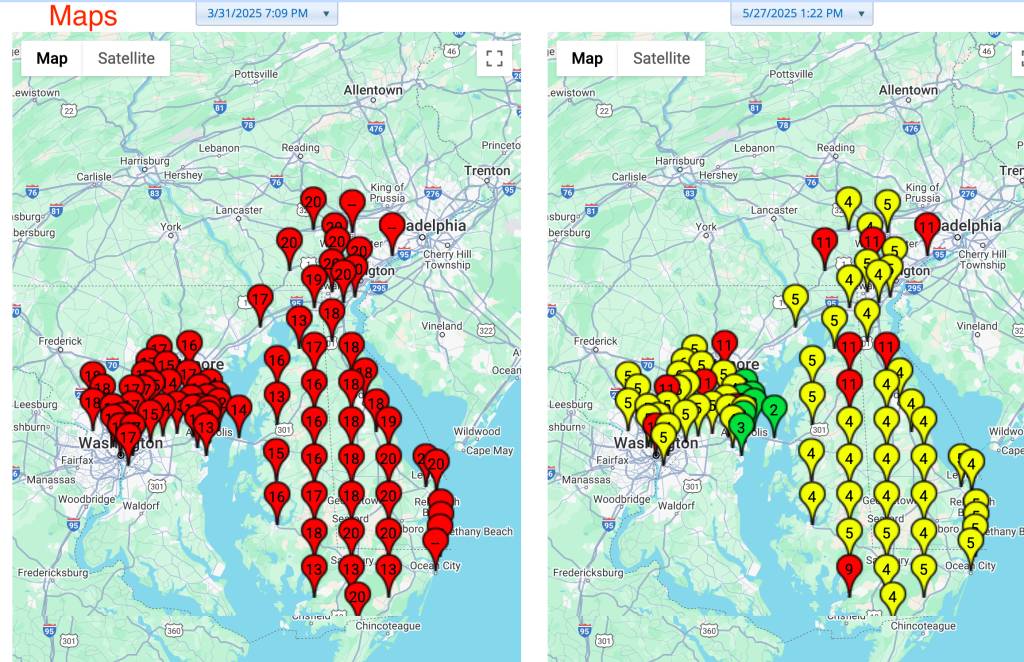
Their most interesting finding, though, wasn’t about traffic. In another test, they saw Google’s AI Overview for a key service query quote language pulled from the press release, a strong hint that press releases can function as a discoverable “source document” for AI-generated answers when the content meets credibility thresholds.
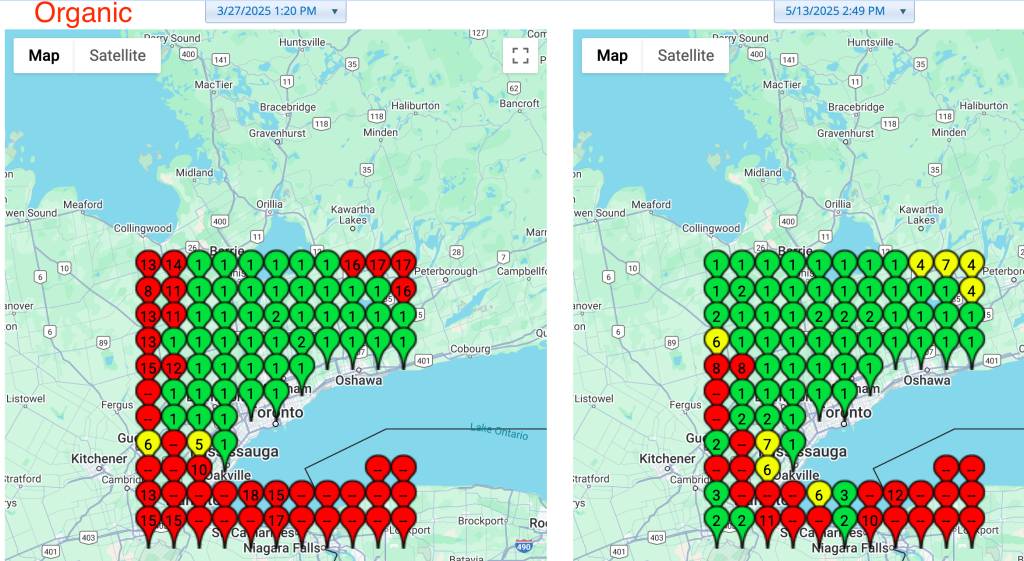
The takeaway for agencies: press releases are re-entering the SEO conversation, not as a shortcut, but as a digital PR asset that can generate citations, mentions, and trust signals across the ecosystem.
Why press releases can help SEO now (even if they don’t “pass link juice”)
1) They expand “search real estate” for brand and entity queries
Cision (PR Newswire’s parent company) notes that releases can increase visibility because they’re often indexed across multiple sites, your client’s newsroom page plus third-party placements, creating more opportunities to appear in results, particularly for brand-related searches. In some cases, they may also surface in areas like Google News/Discover depending on eligibility and newsworthiness.
For agencies, this is especially relevant when you’re trying to:
- protect/bracket branded SERPs (own more of page one),
- reinforce entity associations (brand + category + geography),
- push accurate messaging during growth, rebrands, expansions, or reputational moments.
2) They support the “shift from clicks to citations” in AI-driven search
Yoast’s 2025 wrap-up describes a broader SEO shift: less focus on pure rankings and more focus on visibility management, where citations and trust increasingly influence what gets surfaced, summarized, or ignored in AI-driven experiences.
In that context, press releases are useful because they’re typically:
- structured,
- fact-forward,
- quote-friendly,
- and widely replicated, making them easier for machines (and journalists) to parse and reuse.
3) They are a gateway to real SEO value: earned coverage
The highest-ROI scenario is not syndication, it’s earned pickup: a journalist, industry publication, or local outlet covering the story and linking (or at least mentioning) the brand.
Search Engine Land’s digital PR guide frames this clearly: digital PR is about earning online coverage that builds brand visibility, citations, trust, and often backlinks. The press release is often the “packaged story” that makes that coverage easier to secure.
4) They can strengthen local prominence signals when executed hyperlocally
Local results are heavily influenced by real-world prominence and corroboration. Search Engine Land has explicitly highlighted “hyperlocal PR” as a way to earn mentions and trust from community-level sources (local blogs, influencers, grassroots partnerships) – signals that can support both traditional rankings and AI-driven visibility.
That aligns with Sterling Sky’s observation that local pack movement can be one of the first things to improve after a release goes live.
The non-negotiable caveat: Google still treats press-release link manipulation as spam
Agencies should be crystal clear here: press releases are not a safe place for keyword-rich anchor text link building.
Google’s spam policies explicitly call out “links with optimized anchor text in press releases distributed on other sites” as an example of link spam.
In practical terms:
- Do not use press releases to push exact-match anchors at scale.
- Do not buy distribution primarily to manufacture followed links.
- Do not treat syndicated copies as a “backlink campaign.”
If distribution is paid/transactional (which it usually is), link qualification matters. Google’s guidance on link attributes explains that nofollow remains an accepted method for flagging ads/sponsored links, and they recommend using rel=”sponsored” when practical.
Google has also reiterated the importance of qualifying outbound links with commercial intent to avoid link-scheme violations.
The agency playbook: how to use press releases to support SEO (without risk)
Step 1: Start with real “news,” not marketing filler
Press releases work best when there’s something legitimately reportable:
- original data or a study,
- a local expansion or office move,
- awards/recognition with verifiable details,
- partnerships (with both parties aligned),
- community initiatives with local relevance,
- product/service launches with differentiated specifics.
Search Engine Land’s digital PR guidance emphasizes that newsworthiness and a strong “hook” matter if you want pickup, not just publication.
Step 2: Publish an owned version in the client’s newsroom
Always host a canonical version on the client site (a newsroom/blog post), then distribute from there. This gives you:
- a page you control,
- better internal linking opportunities,
- a stable URL for journalists to cite,
- and a page that can rank for brand + announcement terms.
Step 3: Write like a journalist and like an AI system will quote you
This is where most agencies underdeliver. The release should be:
- specific and factual (avoid vague superlatives),
- easy to skim (clear headings, short paragraphs),
- quotable (clean executive quote + data points),
- and locally grounded when relevant (city, neighborhood, service area clarity).
Sterling Sky’s results were driven by releases tied to real news/statistics and structured content, not generic PR fluff.
Step 4: Use conservative linking – optimize for humans, not “PageRank”
Keep links minimal and natural:
- 1 link to the most relevant page (often the newsroom post or a key service/product page)
- optionally 1 supporting link (proof page, resource, dataset, or “about” page)
Use branded/URL anchors and avoid “SEO-fueled” anchor text patterns.
Step 5: Distribute multi-channel (wire is only one channel)
Wire distribution can help with baseline visibility, but agencies win when they layer on:
- direct outreach to niche and local journalists,
- partner/community websites,
- local associations/chambers,
- relevant newsletters,
- social amplification (executives, brand, partners),
- repurposed assets (short video clips, charts, quote cards).
This is what turns a press release into digital PR.
Step 6: Measure what actually matters
Search Engine Land recommends measuring beyond “did we get links?” Track:
- referral traffic in Google Analytics,
- assisted conversions from referral sources,
- brand search demand lift,
- local pack movement (where relevant),
- earned links and unlinked mentions (and then convert mentions into links when appropriate).
Also, keep AI expectations grounded. One recent Search Engine Land analysis noted that, for many sites, total referral sessions from major LLM platforms combined are still only a small share (roughly 2–3% of Google organic traffic).
So yes, AI citations matter—but press releases should still be positioned as an add-on to fundamentals, not a replacement for technical SEO, content quality, and CRO.
What to tell clients (a clean, agency-safe narrative)
Here’s the positioning that typically lands well with decision-makers:
- “Press releases don’t work as a ‘backlink trick’ and trying to force that can create risk.”
- “They can support SEO by increasing credible mentions, reinforcing brand/entity signals, and earning real coverage.”
- “In local markets, a strong release can contribute to prominence and visibility lifts, sometimes faster than expected.”
- “In AI-driven search, clear, credible releases can become a source that gets cited or quoted.”
That’s modern SEO: authority, corroboration, and visibility across surfaces.
Note: PR writing + multi-channel distribution is already built into our SEO plans
If you’re looking to productize this for clients without building an in-house PR department, we can help. Our SEO plans include PR Writing & Multi-Channel Distribution designed to generate credible mentions, support local/organic visibility, and increase the odds of earned pickup, so your clients get business impact, not just “a press release that got published.”