Dave Thompson April 28, 2026 1568 Views
A 5 percent lift in retention can expand profits by 25 percent to 95 percent. That range gets quoted often because it matches what agency operators see in practice. The first 30 days shape whether a client feels momentum or starts questioning the buy.
Poor onboarding usually shows up before poor campaign performance. I’ve seen accounts stall because the handoff was messy, approvals sat in email, or the client had no clear view of what the team was doing week to week. In those cases, the service was not always the problem. The operating system was.
That is the lens for this comparison. The goal is not to rank software on feature count alone. It is to examine how each platform supports a retention-focused onboarding system, from kickoff communication and milestone design to approvals, reporting visibility, and the white-label client experience. Agencies that sell recurring services need more than task tracking. They need a process clients can follow and a workspace that reduces uncertainty.
A good onboarding system creates role clarity on both sides, shortens time to first value, and gives clients one consistent place to check progress. That matters even more in SEO, PPC, web design, and reseller models, where deliverables span multiple teams and timelines. If your agency also depends on fulfillment depth after the handoff, this guide pairs well with our breakdown of SEO reseller services that improve client retention and satisfaction.
The platforms below are useful for different reasons. The key decision is operational. Choose the one that fits your delivery model, client communication style, and the level of visibility you want clients to have from day one.
1. Agency Platform
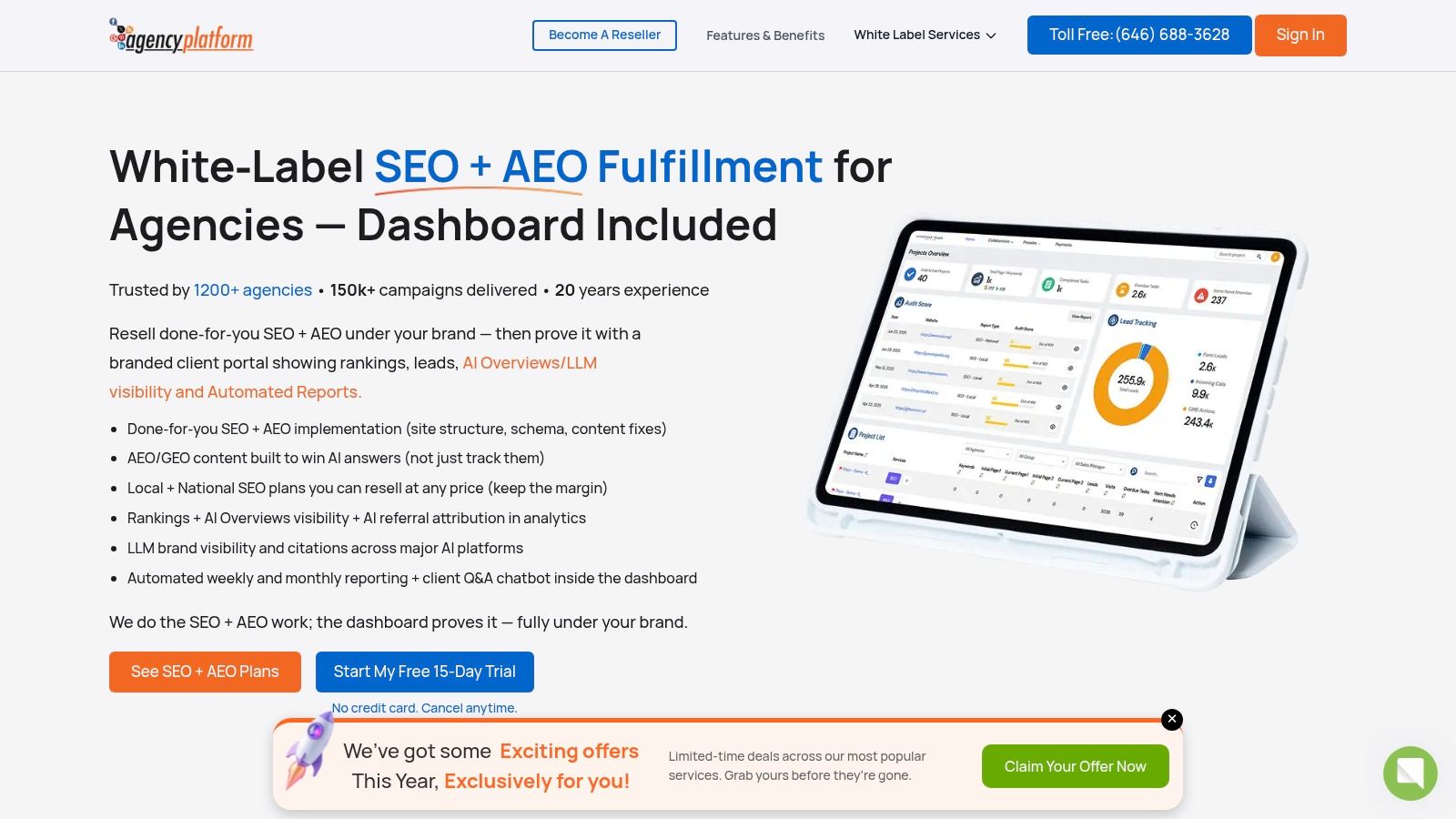
Client retention often breaks in the first 30 days, long before anyone questions campaign quality. The usual cause is operational. The client cannot see what is happening, who owns the next step, or how early work connects to the result they were sold.
Agency Platform fits agencies that want to solve that problem inside one branded system. Instead of stitching together a project tool, a reporting layer, a client portal, and a fulfillment workflow, you start onboarding in the same environment the client will keep using after launch. That continuity matters. It reduces handoff friction and gives clients a stable place to check progress from day one.
The platform is strongest for agencies selling recurring marketing services that need both fulfillment and presentation. Hosted dashboards, custom domains, branded email, and white-label controls help the post-sale experience feel intentional. For reseller and multi-service agency models, that is part of the retention strategy, not a design preference.
Where it helps most
Agency Platform works best when onboarding has to move quickly from kickoff to production. Agencies can bring clients into a portal that already supports service delivery across local SEO, national SEO, content, link building, paid media, social media, and web design. That shortens the gap between signed contract and visible action, which is one of the clearest ways to reduce buyer uncertainty.
I’ve found this especially useful in agencies that sell more than one channel per account. If the client buys SEO, PPC, and web support together, the onboarding system needs to show how those workstreams connect. A disconnected setup usually creates duplicate status updates, unclear approvals, and too many “just checking in” emails. Teams trying to build a more connected omnichannel customer experience usually need the same operational fix internally first.
Practical rule: If a client cannot see deliverables, performance signals, pending approvals, and next steps in one place, account managers end up translating the process by hand every week.
Why it supports retention
The retention case for Agency Platform is straightforward. Clients adopt one portal instead of trying to interpret your internal stack. That makes early onboarding simpler to follow and easier to trust.
Agency Platform pulls reporting, analytics visibility, lead tracking, and project progress into one white-label workspace. In practice, that means kickoff emails can send clients to a live system rather than a patchwork of logins and spreadsheets. It also means your team can build onboarding around clear milestones: intake complete, assets received, baseline reporting live, first deliverables in motion, first review scheduled.
That structure is what turns software into a retention system. The tool matters less than the behavior it creates. If the portal answers four questions quickly, clients stay calmer: what is live, what is waiting on me, what changed this week, and what happens next?
Agency Platform also includes automated weekly and monthly reporting, role-based access, and notifications. Those are not flashy features, but they solve common onboarding failures. Someone forgets to share an update. A stakeholder misses an approval request. The client asks for performance context before the team has packaged it clearly. Good systems reduce those moments before they become confidence problems.
A good companion read is this guide on SEO reseller services and client retention, because it addresses the same operating principle. Fulfillment quality and client communication need to run through the same system if you want retention to improve consistently.
Trade-offs to know
There are two practical constraints.
- Pricing requires a sales conversation: Public self-serve pricing is not available, so evaluating fit takes a live discussion and a clearer estimate of service mix, volume, and white-label needs.
- The 15-day trial is best for process validation: It is useful for testing the dashboard experience, reporting flow, user permissions, and service alignment. It is not long enough to judge long-term campaign performance.
For agencies comparing onboarding platforms through a retention lens, Agency Platform stands out because it combines client-facing visibility with actual delivery capacity. If your goal is to reduce churn by tightening the path from signup to first value, that combination is hard to ignore.
2. Rocketlane
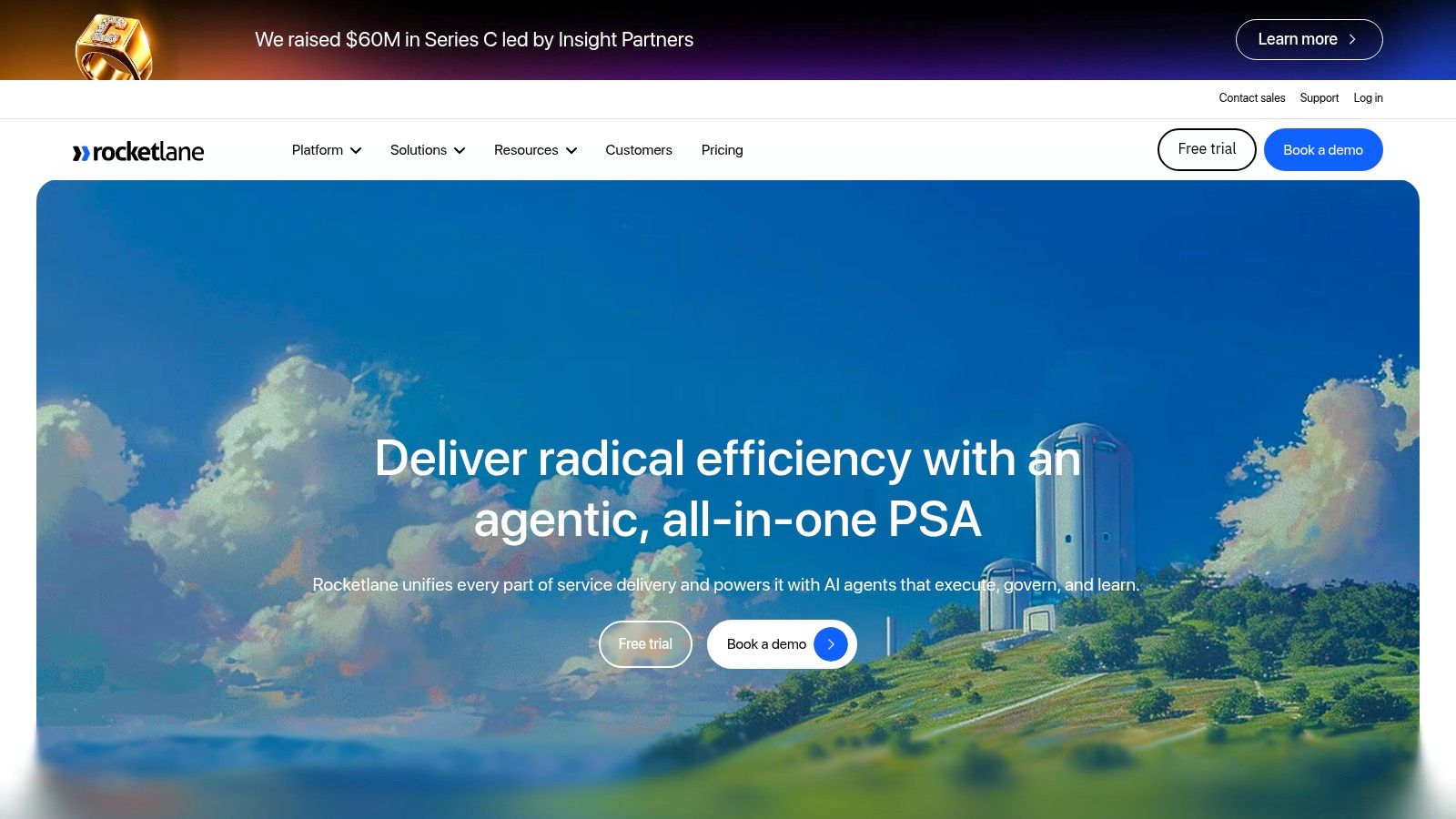
Rocketlane is built for teams that want onboarding to run like a disciplined delivery function. It combines client portal features with PSA-style controls, which makes it a strong choice for agencies managing multiple launches, cross-functional contributors, and utilization pressure.
What Rocketlane does well is make progress visible to both the team and the client. Branded portals, approvals, milestone tracking, resource planning, timesheets, and performance dashboards all sit in one system. If your onboarding problems come from project sprawl rather than fulfillment gaps, Rocketlane is a serious option.
Best fit and friction points
Rocketlane suits agencies with a dedicated implementation or onboarding team. Its template system, Gantt and Kanban views, automations, and resource planning tools are useful when launches need structure across many moving parts. It’s also helpful if you’re trying to measure delivery efficiency alongside client experience.
The trade-off is weight. Smaller agencies can find the platform heavier than they need, especially with seat minimums on team plans and more advanced features pushed into higher tiers.
Clients stay calmer when the portal answers the “where are we?” question before they ask it.
That’s one reason this model works well for omnichannel agencies. A shared portal gives clients continuity across channels, which mirrors the broader need for a seamless customer experience across touchpoints.
What stands out
- Client portal quality: The portal is polished and client-friendly, which reduces status-chasing emails.
- Operational depth: Resource and utilization features help agency leaders manage margins, not just milestones.
- Lower evaluation risk: Transparent pricing and a self-serve trial make testing easier than with sales-led enterprise tools.
Rocketlane is strongest when onboarding is already a defined function inside the agency and you need more control, reporting, and forecasting around delivery.
3. GUIDEcx
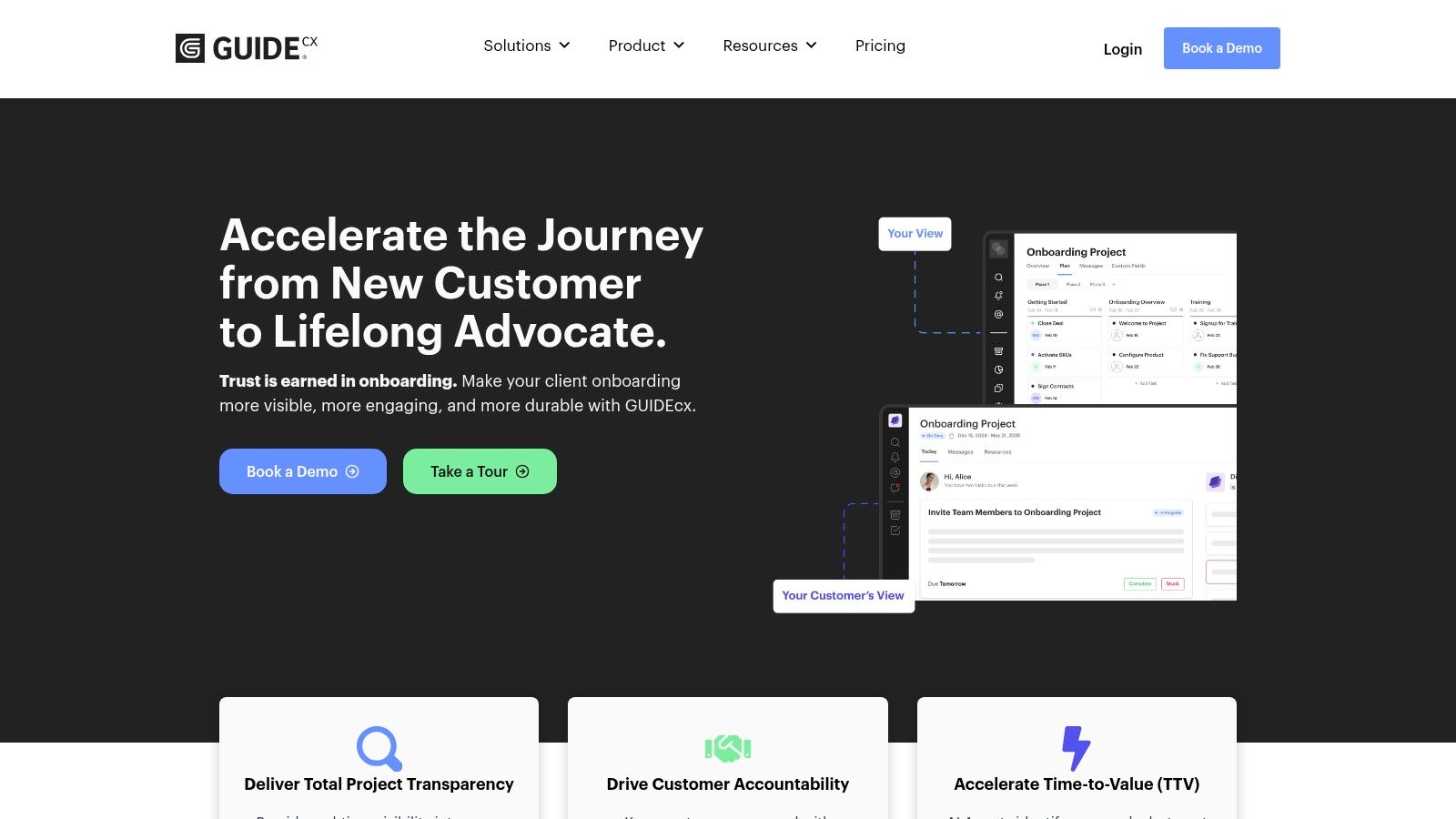
GUIDEcx is purpose-built for customer onboarding and time-to-value. Its biggest strength is reducing client friction. Login-less access, persona-based experiences, messaging, forecasting, and optional PSA functionality make it attractive for agencies and service teams that want customers to participate without creating a lot of resistance.
That low-friction design matters. Custify reports that 70% abandon digital processes exceeding 20 minutes. In agency onboarding, every extra click, login, or approval delay can slow setup and weaken momentum.
Where GUIDEcx earns its place
GUIDEcx is useful when your main challenge isn’t task creation. It’s task completion. Agencies often build good onboarding plans, then watch them stall because the client never uploads assets, fills forms, or assigns stakeholders. GUIDEcx is designed to remove that drag.
Its forecasting and on-time delivery visibility are also practical for larger accounts where timelines slip unnoticed unless someone surfaces them early. If your agency handles more complex implementations, the platform has enough depth to grow into resource management and billing workflows.
For teams prioritizing retention, customer retention strategy discipline matters as much as software choice. GUIDEcx supports that discipline by keeping the client engaged in the process instead of leaving onboarding hidden inside the agency.
The trade-off
The main downside is evaluation friction. Pricing isn’t public, and more complex rollouts can take time. That makes GUIDEcx better for agencies that already know onboarding is a strategic function worth investing in, not for teams just trying to replace a spreadsheet next week.
4. Onboard.io
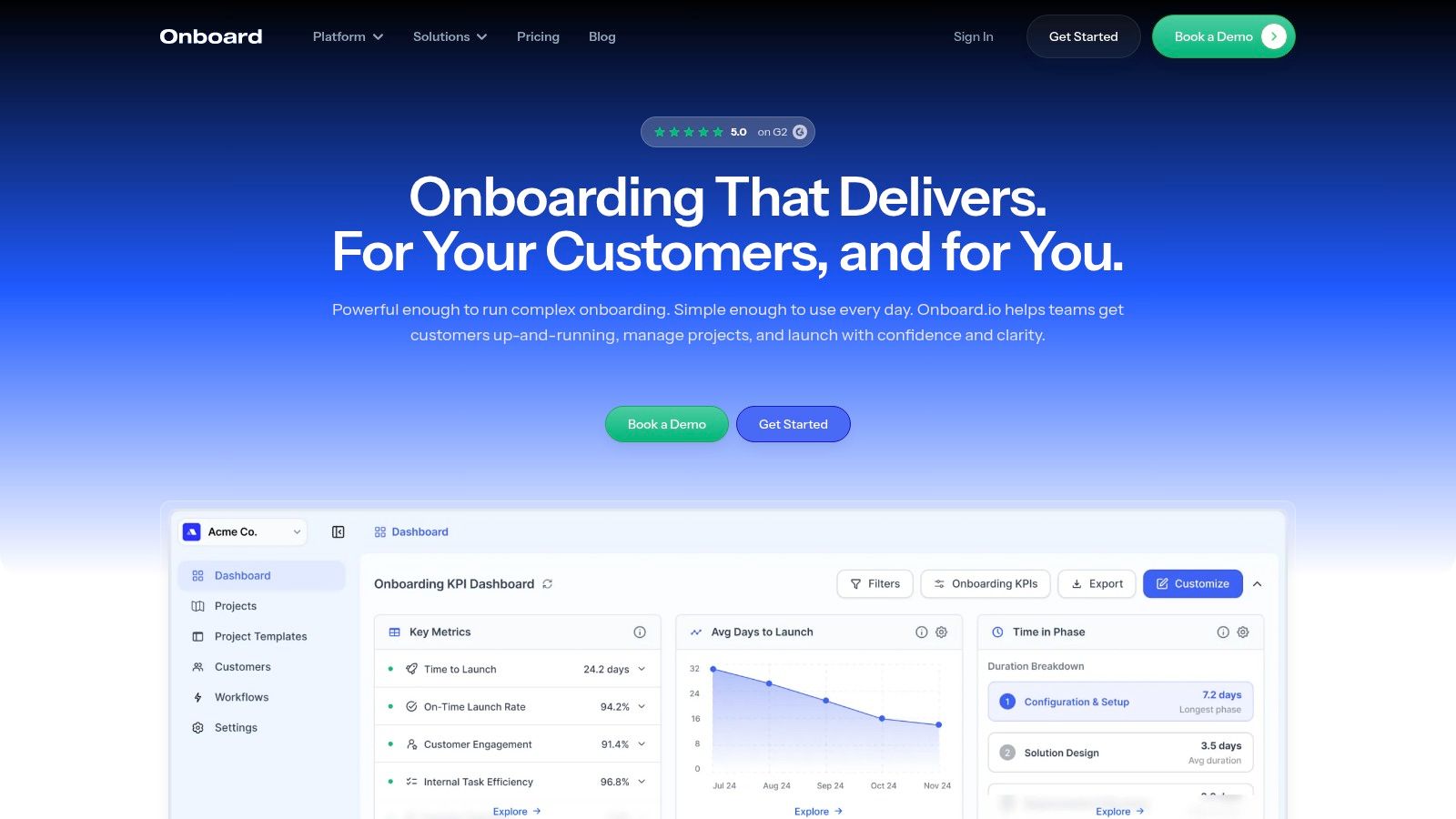
Onboard.io is narrower than some tools here, and that’s part of the appeal. It’s focused on customer onboarding instead of trying to be your full operations stack. For agencies that want a client-facing portal, templates, task management, reporting, and basic automation without a giant implementation project, it’s easy to take seriously.
This is a strong option for small to midsize agencies that have outgrown general PM tools but don’t need enterprise PSA complexity. Unlimited external customers across tiers is a practical advantage if you want client access without worrying about cost creep on the client side.
Why agencies choose it
Onboard.io replaces one of the most common failure patterns in agency onboarding. Teams build processes in internal tools that clients never really use. Onboard.io brings the customer into the workflow with a dedicated portal and live discussions inbox, which creates better accountability during setup.
Its transparent pricing and 14-day free trial also make it easier to test than tools that force a longer buying cycle. You can validate the client experience quickly, which is often the deciding factor.
A focused onboarding tool beats a bloated PM setup when the real problem is client participation, not internal task creation.
What to watch
The entry tier is intentionally lean. If you need workflows, CRM integrations, SSO, or stronger branding controls, you’ll likely need a higher plan or add-ons. That’s not a flaw so much as a buying signal. Onboard.io works best when you want clarity and speed, not a sprawling operational suite.
5. Arrows
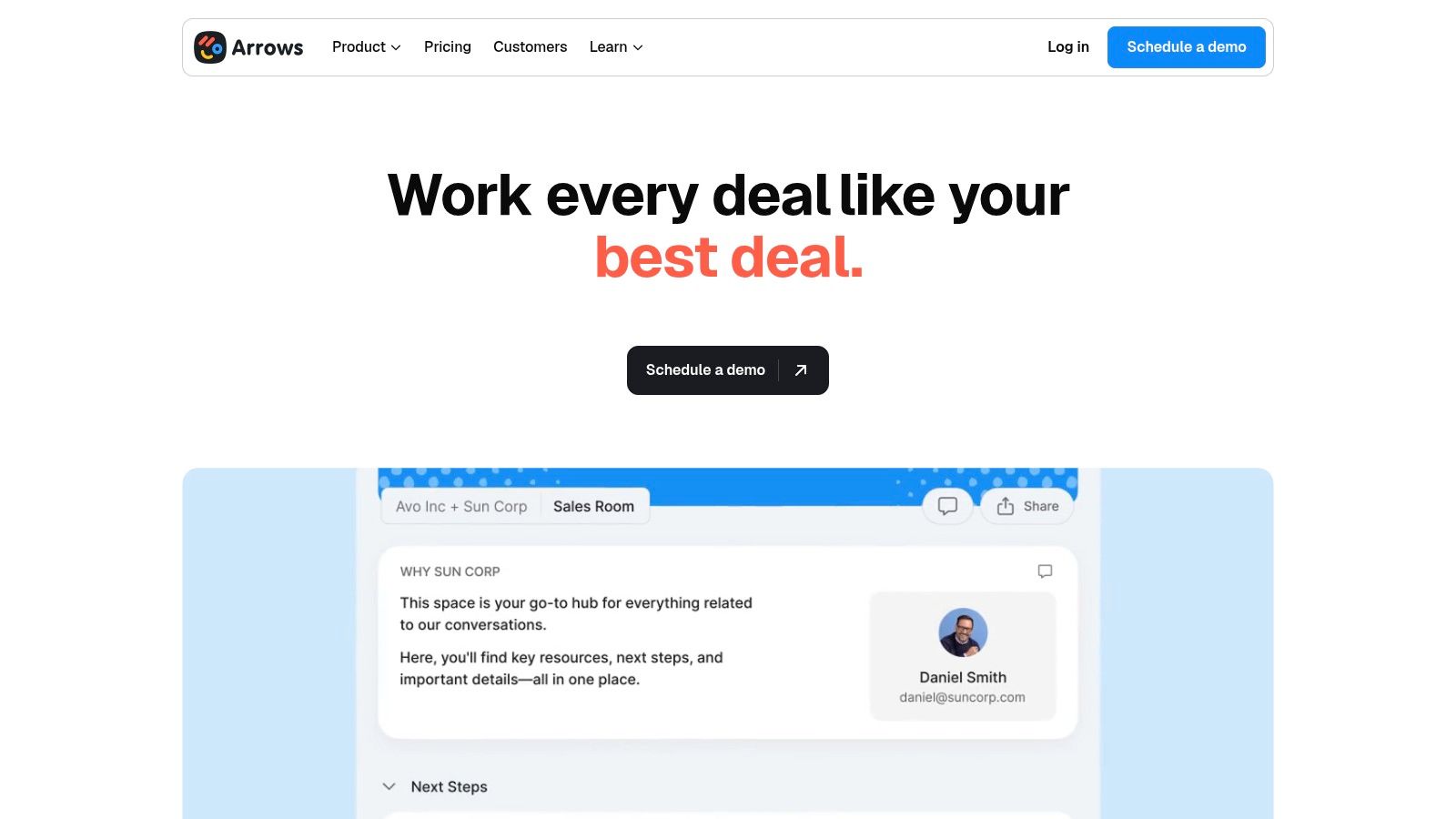
Arrows stands out because it lives close to the CRM instead of trying to replace it. For teams standardized on HubSpot, and in some cases Salesforce, that’s a major advantage. Shared action plans, file collection, reminders, and progress tracking sit where the customer record already lives.
The practical value is handoff continuity. Sales closes the deal, implementation takes over, and both teams can work from the same plan framework without exporting context into a separate system. That matters because the handoff is where many agencies lose momentum.
Why the CRM-native approach matters
One of the clearest gaps in onboarding software is measuring the point where engagement drops during the sales-to-service transition. Onramp’s review of client onboarding software notes that platforms often standardize process but don’t help agencies quantify friction in the first 24 to 48 hours after handoff.
Arrows is well positioned for that transition because the plan can be attached directly to the deal or customer object. You don’t have to rebuild context in a disconnected portal. For HubSpot-based agencies, that usually means less lag, fewer missing details, and better follow-through.
Best fit
- HubSpot-centered teams: Arrows is most compelling if your agency already runs on HubSpot.
- Sales-to-onboarding alignment: Shared plans reduce context loss after the deal closes.
- Customer accountability: Clients can see exactly what they owe and what’s complete.
If your agency doesn’t live in HubSpot, Arrows loses a lot of its edge. But if it does, this is one of the cleanest ways to turn CRM data into an onboarding workflow clients can easily follow.
6. Dock
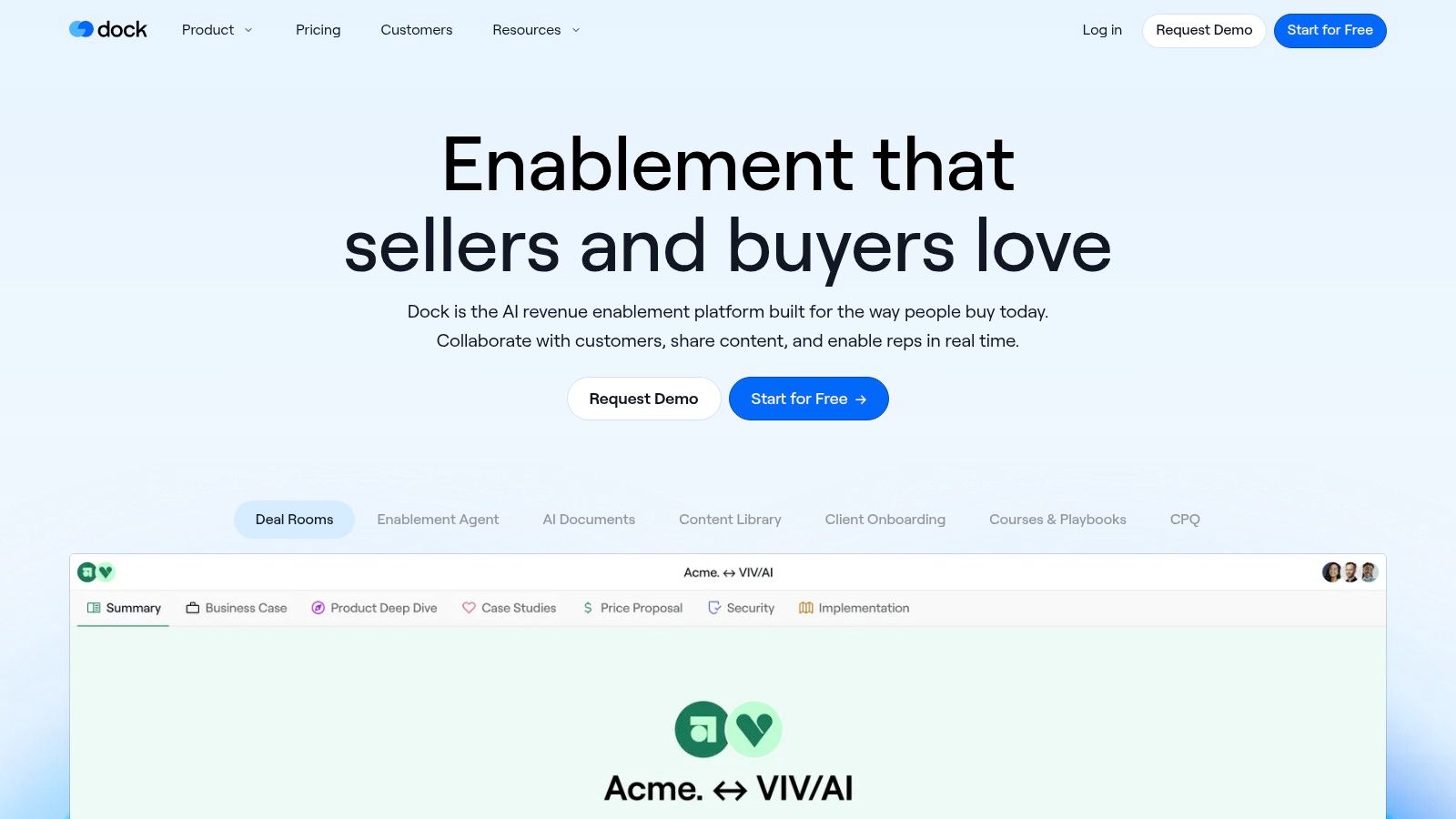
Dock takes a different route. It isn’t trying to be full project operations software. It focuses on client-facing workspaces and mutual action plans that carry from late-stage sales into onboarding and customer success.
That shared workspace approach is useful when the biggest retention risk is confusion. Files, next steps, owners, timelines, and messages stay in one place the client can access without hunting through email threads.
Where Dock shines
Dock is especially good for agencies that want to tighten handoff between sales and delivery. Mutual action plans create one shared source of truth, which helps keep accountability visible on both sides. Its engagement analytics also add something many systems miss. You can see which stakeholders are active, where attention drops, and where work is getting stuck.
The free plan makes Dock easy to pilot with real clients before a broader process change. That’s a meaningful advantage if you’re trying to validate a new onboarding model without rebuilding operations first.
The compromise
Dock won’t replace a full PSA or deep project management environment. If you need complex resource management, billing logic, or advanced delivery operations, you’ll need another system around it. But for agencies trying to reduce context loss and speed time-to-first-value, Dock is one of the cleaner tools available.
7. TaskRay
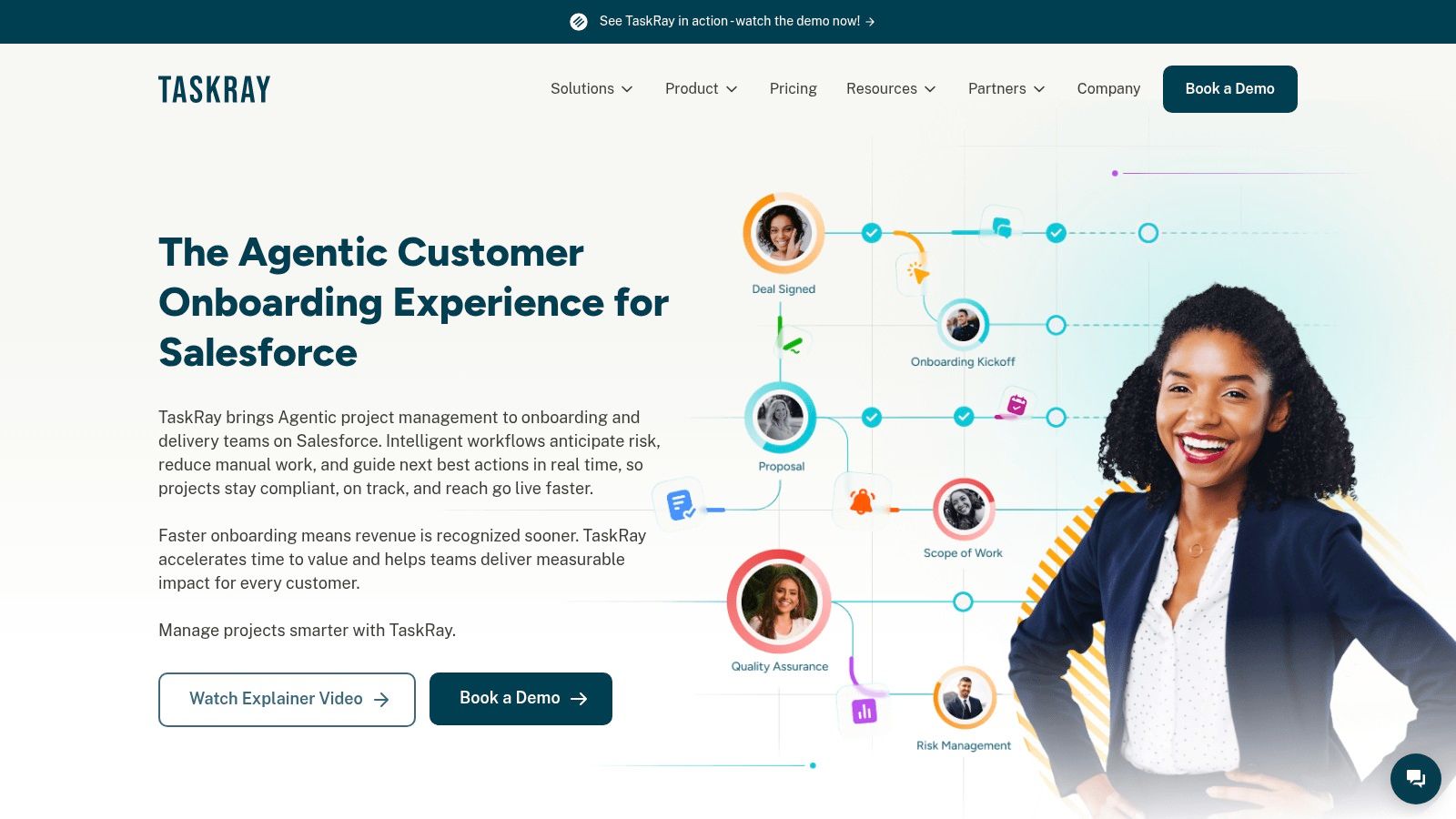
TaskRay is the enterprise choice for Salesforce-first organizations. It’s fully native to Salesforce, which means templates, automation, handoffs, reporting, and collaboration all happen inside the system many larger teams already trust.
For agencies with complex onboarding across multiple departments, that native model has real value. It preserves data lineage and reduces the operational friction that comes from syncing records between separate tools.
When TaskRay is worth it
TaskRay makes sense when you already have Salesforce discipline and want onboarding to inherit it. You can launch from opportunities, track milestones, assign resources, manage utilization, and report across portfolios without leaving the CRM environment.
That’s a good fit for larger agencies, enterprise consulting teams, or regulated environments that care about controls such as Salesforce Shield or Government Cloud support.
If your process already lives in Salesforce, moving onboarding somewhere else usually creates more problems than it solves.
Limitations
The trade-off is obvious. This platform delivers its best value inside a Salesforce-heavy operation. If that isn’t your environment, TaskRay can feel oversized and procurement-heavy. Pricing is quote-based, and the implementation commitment is bigger than lighter onboarding tools.
From Signup to Success: 7-Platform Onboarding Comparison
| Item | Implementation (🔄) | Resource needs & speed (⚡) | Expected outcomes (⭐ 📊) | Ideal use cases (💡) | Key advantages |
|---|---|---|---|---|---|
| Agency Platform | Medium 🔄, branding, integrations and vendor setup | Low internal staffing; moderate vendor coordination ⚡ | Strong ⭐⭐⭐, measurable SEO/recurring revenue; consolidated reporting 📊 | Agencies reselling SEO and needing white‑label fulfillment 💡 | Full white‑label dashboard, turnkey services, 25+ integrations |
| Rocketlane | Medium 🔄, template and integration configuration | Moderate; 5‑seat minimum and ramped resource features ⚡ | Good ⭐⭐, faster launches, utilization & TtV visibility 📊 | Professional services/onboarding teams standardizing launches 💡 | Polished client portal, resource planning, transparent pricing |
| GUIDEcx | High 🔄, enterprise rollout and forecasting setup (~45 days) | Moderate‑High; sales engagement and enterprise onboarding ⚡ | High ⭐⭐⭐, increased client participation and on‑time delivery 📊 | Organizations scaling onboarding to enterprise PSA use cases 💡 | Login‑less portals, forecasting, deep PSA/support for scale |
| Onboard.io | Low 🔄, fast setup with preconfigured templates | Low; quick TtV, clear pricing and 14‑day trial ⚡ | Moderate ⭐⭐, rapid time‑to‑value; advanced reporting on Pro 📊 | SMB success/implementation teams replacing spreadsheets 💡 | Transparent tiers, fast setup, unlimited external client access |
| Arrows | Low‑Medium 🔄, minimal if HubSpot native; CRM attachment | Low for HubSpot teams; limited utility outside HubSpot ⚡ | Moderate ⭐⭐, reduces back‑and‑forth; CRM‑native progress tracking 📊 | Teams running on HubSpot needing CRM‑native action plans 💡 | Deep HubSpot integration, easy sales→onboarding handoff |
| Dock | Low 🔄, simple workspace and template setup | Low; generous free plan for pilots (up to 50 workspaces) ⚡ | Moderate ⭐⭐, improved handoffs and engagement analytics 📊 | Sales→services handoffs and teams piloting client workspaces 💡 | Generous free tier, engagement analytics, simple client UX |
| TaskRay | High 🔄, complex Salesforce‑native implementation | High; requires Salesforce commitment and enterprise procurement ⚡ | High ⭐⭐⭐, scalable enterprise delivery and data lineage 📊 | Enterprise teams fully on Salesforce (Shield/GovCloud) 💡 | Salesforce‑native, enterprise scale, advanced reporting and controls |
From System to Strategy Building Your Retention Engine
Retention starts getting won or lost in the first few client interactions. Agencies usually see the warning signs early. Missed kickoff attendance, slow asset delivery, weak portal usage, and unclear approvals show up weeks before a renewal risk gets named.
That is why strong onboarding systems are built around client confidence, not just internal task management. The platform matters, but the retention outcome depends on how clearly the system answers five client questions. What happens now? What do you need from me? When will I see progress? Where do I check status? Who owns the next step if something slips?
The teams that hold onto clients longer usually design onboarding around those answers. They give clients one place to work, reduce how much effort is required to keep momentum, and make the first signs of value easy to see. This is the fundamental framework here. The tools only matter if they support that structure.
In agency operations, I have seen the same mistake more than once. A team buys project software that works well for delivery, then treats it like a client onboarding strategy. Internally, everything looks organized. From the client side, the experience still feels fragmented because updates live across email, chat, decks, forms, and reporting tools. Confidence drops fast in that gap.
A retention-focused system does a few things consistently well:
- Gives clients one source of truth. Status, next steps, files, timelines, and owners should live in one client-facing environment.
- Shows early progress fast. Completed kickoff milestones, submitted assets, scheduled deliverables, and activated dashboards reassure clients that work is moving.
- Reduces client effort. Shorter intake forms, clearer requests, and fewer logins improve completion rates.
- Tracks engagement, not just tasks. Low attendance, delayed approvals, and weak workspace activity often matter more than a green project plan.
- Connects onboarding to post-launch health. Adoption, support volume, expansion potential, and renewal risk are better measures than checklist completion alone.
White-label onboarding deserves more attention in that system design. A branded dashboard is not just a presentation choice. It lowers trust friction, keeps communication anchored in one place, and gives clients a stable reference point from kickoff through reporting. For recurring-service agencies, that consistency helps protect the handoff from sales to delivery, which is where confidence often dips.
Agency Platform fits agencies that want that experience in one environment. It combines client-facing visibility, reporting, delivery support, and operational infrastructure in a single setup. The trade-off is practical. An all-in-one system usually gives better control and fewer handoff gaps, while a specialist stack gives more flexibility if your process is already mature and your team can manage the complexity.
Client education also belongs inside onboarding, not beside it. New clients need more than a kickoff call. They need to understand how approvals work, what the dashboard means, which metrics matter first, what turnaround times to expect, and where their response time affects delivery. That clarity cuts avoidable support questions and makes later performance conversations much easier.
Choose the platform that fits your operating model and the client experience you want to deliver. If your agency needs a branded onboarding and delivery system built to reduce tool sprawl, show progress early, and support retention over time, Agency Platform is worth evaluating.